

When it comes to planning a commercial greenhouse or upgrading your existing facility, the decision of what glazing material to choose is a major one. At GGS, we build custom greenhouse structures designed to maximise growing performance, efficiency, and longevity.
One of the key questions many growers face is: Should I go with glass or polycarbonate/poly (plastic) glazing? In this post, we’ll compare the two in terms of light transmission, insulation, cost, durability, and suitability for different kinds of operations, so you can make the best choice for your crop, climate, and budget.
Light Transmission & Plant Performance
Glass has long been considered the “gold standard” in greenhouse glazing because of its clarity and high light transmission. According to industry sources, glass can allow up to ~90% of natural light through, which on the surface seems ideal for growers who want maximum sun exposure.
However, high light transmission isn’t always an unqualified benefit. Too much direct sunlight can create “hot spots,” stress plants, cause uneven growth, or even burn delicate foliage. In contrast, polycarbonate (often twin-wall or multi-wall poly) typically transmits somewhat less raw light, but diffuses it, scattering light more evenly throughout the greenhouse. This improves canopy penetration and often supports more uniform growth.
Supplemental lighting plays an important role in balancing these differences. In regions with shorter days or low-light seasons, LED or HPS lighting systems can offset reduced natural light and maintain consistent production. Conversely, in glass greenhouses that already receive ample light, targeted supplemental lighting can help even out light levels during cloudy periods or boost intensity for light-demanding crops.
So, if your operation is in a high-sun region or you grow sensitive crops with dense canopies, that diffused-light benefit of polycarbonate, paired with strategic supplemental lighting, may be ideal. But if you’re cultivating high-light crops in moderate climates and want maximum natural transmission, glass remains a strong choice.
Insulation, Heating & Energy Costs
One of the less obvious but highly influential factors in greenhouse budgeting is thermal performance, how well the structure retains warmth in winter and resists unwanted heat in summer. Here, polycarbonate often outpaces single-pane glass. Many sources note that multi-wall polycarbonate has built-in air pockets that improve its insulating value (higher R-value / lower U-value) compared to single-pane glazing.
Glass, particularly older single-pane designs, can lose heat rapidly, increasing your heating costs or cooling load. For example, a single-pane greenhouse may have double or even triple the heating costs compared to a double-pane or multi-walled polycarbonate greenhouse. On the flip side, high-quality double-pane or specialty insulated glass can improve performance, but at an added cost.
In commercial operations, especially in colder climates or for year-round growing, the thermal performance of your glazing directly impacts operating costs. Polycarbonate may give you an edge in insulation, while glass may demand more robust supplemental heating and cooling systems to maintain a stable environment. Integrating efficient climate control systems such as energy curtains, variable-speed fans, or zoned HVAC systems can help offset those differences, ensuring optimal growing conditions regardless of season.
Ultimately, your choice of glazing should align with your region’s climate and your approach to environmental control. A polycarbonate structure can help reduce reliance on supplemental heating, while glass greenhouses, paired with advanced cooling and heating technology, can deliver precise, high-light environments for more controlled production.
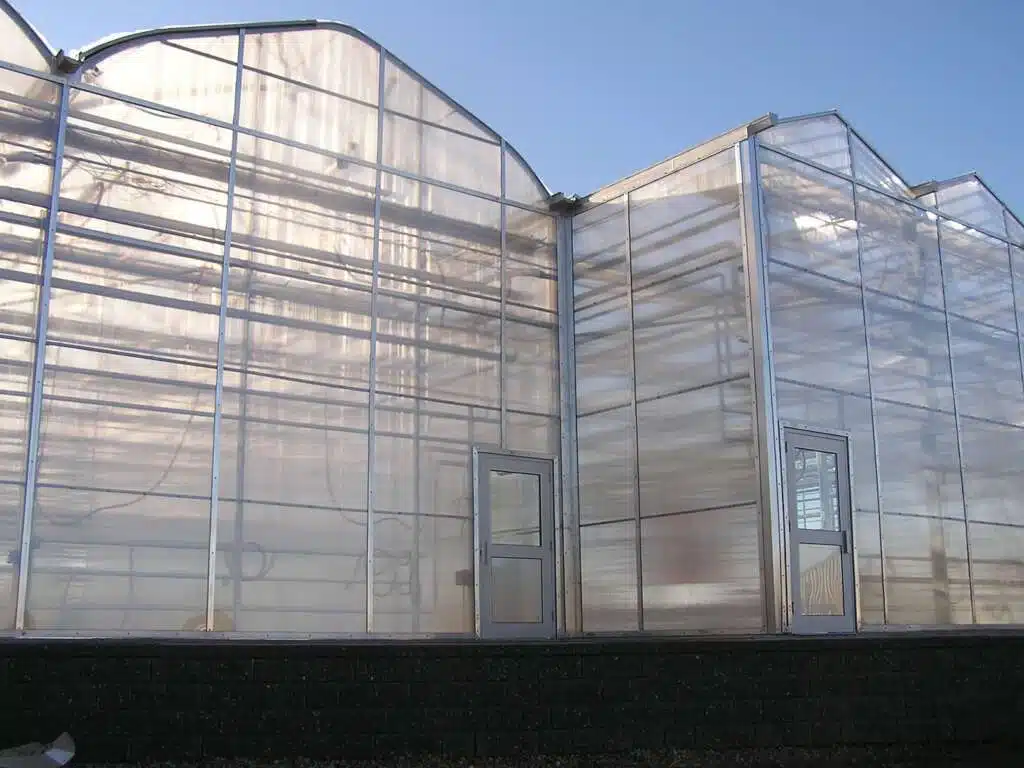
Durability, Weather Resistance & Maintenance
Another key factor: how the material stands up to weather, wear, and maintenance demands. Glass has a long lifespan, is recyclable, and offers excellent clarity. But it is heavy, fragile, requires a sturdy foundation and careful installation, and if broken, can be dangerous and expensive.
Polycarbonate, on the other hand, is lighter, impact-resistant, and less likely to shatter. That means better performance in high-wind, hail, or storm-exposed regions. That said, polycarbonate panels may degrade (yellowing, scratching), may have a shorter lifespan (10–20 years in some cases), and may require panel replacement depending on quality.
Maintenance is another dimension: glass surfaces may demand more frequent cleaning (clearer appearance, less diffusion loss) and careful handling; polycarbonate may be easier to maintain in many operations.
In short, if you’re in a region prone to hail, heavy snow, or high winds, polycarbonate may reduce risk. If you’re in a more benign environment and want long-term clarity and a premium aesthetic, glass could still be appropriate.
Cost & Lifespan Considerations
From a budgeting perspective, cost is two-fold: upfront capital cost + lifetime operating cost (maintenance, replacement, energy). Polycarbonate generally offers a lower upfront cost and lighter structure, which can reduce foundation and framing expenses. But some polycarbonate systems may require panel replacement sooner than glass (depending on grade).
Glass, while it can have a higher initial price (especially if you use double-pane or specialty glass), may have a longer effective lifespan and may not need as frequent replacement (if well built and maintained). The trade-off is a higher initial investment and possibly higher heating/cooling bills if thermal performance is low.
As a commercial greenhouse builder, GGS often advises clients to think through the total cost of ownership: the lifespan of the structure, the energy cost to keep it conditioned, replacement/maintenance costs, crop value, and operational uptime. What may seem cheaper upfront may cost more over 10-20 years if it increases the heating bill or causes crop stress.
Suitability for Different Operations
Given all of the above, how do you decide which glazing is “right” for your operation? Here are some guiding questions:
- What crops are you growing? High-light crops (like certain flowers or fruiting vegetables) may benefit more from glass. Lower light or shade-tolerant crops may be well served by polycarbonate’s diffusion and insulation.
- What is your climate/region? In colder climates where you rely on heating and season extension, the insulation of polycarbonate may pay off. In mild climates, glass may perform very well.
- What are your weather exposures (hail, wind, snow)? If extreme weather is a factor, polycarbonate may be safer and lower risk.
- What’s your budget and timeline? If you’re building a short-term facility or testing new crops, polycarbonate offers a lower upfront cost. If you’re planning a 20+ year facility and see this as a long-term investment, glass may make sense.
- What aesthetic or image considerations matter? Some operations want a premium look (for tours, retail, high-end crops) and may value the “look” of glass; others prioritise performance and economy.
- What are your operational/maintenance capabilities? If you have a full maintenance team and budget for rigorous upkeep, glass may be fine. If you prefer low-maintenance and less risk of breakage, polycarbonate may be more practical.
How GGS Helps You Choose
At GGS, we don’t believe in one-size-fits-all. Our approach is to work with you to define your crop, climate zone, grow schedule, and budget, and then engineer a greenhouse structure that best matches those parameters.
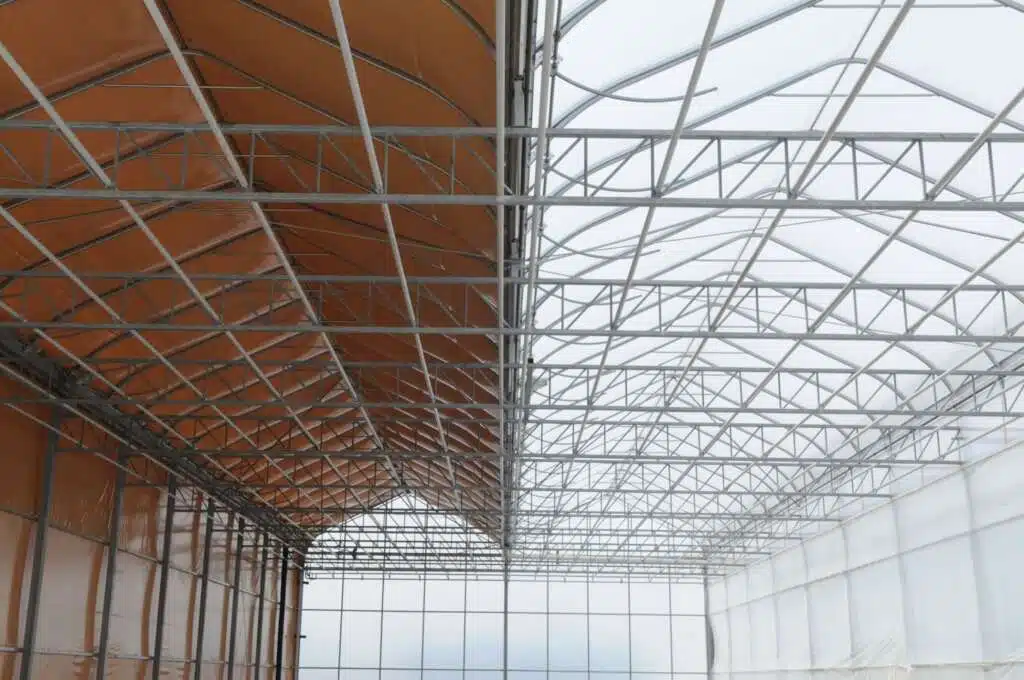
We deliver durable, high-performance greenhouse structures built for scale and longevity. Whether your application is research, commercial production, or architectural showcase, we can specify the ideal glazing solution (glass or polycarbonate) and integrate it with systems (lighting, heating, cooling, venting, screening) so that your growing environment is optimised.
In practice, many commercial growers require a hybrid approach, perhaps using glass in key zones (production benches) and polycarbonate in ancillary areas, or using double-pane glass for certain zones and polycarbonate where the budget is leaner. We’ll review your long-term ROI, maintenance schedule, and risk exposure to make the recommendation.
Conclusion
For Canadian auto-dealerships, the risk of hail damage is real and growing. With insurers tightening conditions for large outdoor vehicle inventories, waiting to act is no longer an option. By installing a hail canopy, your dealership can: reduce physical damage, strengthen your insurance profile, enhance operational resilience, and protect your inventory investment.
We’re ready to help you evaluate your lot, select the right structure, integrate with your insurance discussions, and help you stay ahead of this risk
Ready to explore? Contact us today to learn how we can help design and implement a hail protection structure for your dealership and give you the competitive edge in both asset protection and insurance readiness.
Final Takeaway
If you had to generalize, for operations where maximum light transmission, highest aesthetic appeal, and longest lifespan are most important, and where budget and climate permit, glass remains a premium choice. For operations where insulation, impact resistance, lower cost, and low-maintenance are higher priorities, and especially in challenging weather or for rapid deployment, polycarbonate is often the smarter base choice.
Whatever path you choose, the best decision is informed. Talk with a greenhouse specialist, review your crop calendar, assess climate exposure, and run the numbers for energy and maintenance. With the right glazing and structure, your greenhouse becomes a high-performance asset, not just a roof and walls.
Common Questions & Answers: Poly vs Glass Greenhouses
Q: Is polycarbonate glazing good for a commercial greenhouse?
A: Yes. Modern twin-wall polycarbonate panels provide strong insulation, light diffusion, impact resistance, and cost savings. Many commercial growers choose polycarbonate when insulation and longevity are key, especially in colder or risk-exposed climates.
Q: Does glass glazing outperform polycarbonate in yield because of higher light transmission?
A: Glass does allow higher raw light transmission, but that does not always translate into higher yield. Plants often respond better to diffused light (which penetrates the canopy more uniformly and reduces hot spots). Polycarbonate’s diffusion may actually support better canopy performance in many cases.
Q: How do heating costs compare between glass and polycarbonate greenhouses?
A: Polycarbonate generally has better insulating properties (especially multi-wall varieties), so it can reduce heat loss and lower heating costs in colder months. Single-pane glass, in contrast, may lose heat rapidly and increase heating loads.
Q: What are the maintenance challenges of each?
A: Glass requires more careful handling, a strong foundation, and frequent cleaning to maintain clarity. Broken panes are safety risks. Polycarbonate is lighter, more impact-resistant, and easier to maintain, though it may scratch, yellow, or need replacement sooner depending on quality.
Q: In a region with heavy snow or hail, which should I choose?
A: In heavy snow, hail or wind-prone zones, polycarbonate often offers a lower-risk solution because of its impact resistance and lighter framing load. Glass may still be viable, but will require more robust structural design and possibly laminated/tempered glass.
Q: Does the choice of glazing affect resale or long-term investment?
A: Yes. A high-quality glass greenhouse, if well maintained, can be a long-term asset and may offer higher resale value or longer service life. On the other hand, polycarbonate may require replacement sooner (depending on grade) but offers a lower upfront cost and risk. It’s key to assess your planned horizon (10, 20 or more years) when judging pay-back.
Q: Can I retrofit an existing greenhouse with better glazing?
A: Yes. Some growers upgrade older single-pane glass houses with double-pane glass or replace panels with multi-wall polycarbonate to improve insulation and energy efficiency. Decisions depend on frame condition, climate exposure, and budget.