

When it comes to protecting your livestock, the right shelter makes all the difference, not just for animal health and productivity, but also for your bottom line. For decades, traditional barns made from wood or metal have dominated barn structures. But today’s livestock producers are increasingly turning to fabric-covered structures as a smarter, more efficient alternative.
At GGS, our fabric-covered solutions aren’t just for plants. They’re built to protect everything that matters most, including livestock, feed, equipment, and farm operations. In this blog, we’ll explore why fabric-covered structures are outperforming traditional barns for livestock housing, helping farmers save money, improve animal welfare, and operate more efficiently.
What Are Fabric Covered Structures?
Fabric-covered structures are engineered buildings with a steel frame and a durable fabric membrane cover. They are designed to offer reliable protection against elements like wind, rain, snow, and sun, while delivering the performance farmers demand. GGS fabric structures combine engineered strength with long-lasting performance and customizable design for a wide range of agricultural applications.
Top Reasons Fabric Covered Structures Outperform Traditional Barns
1. Faster Construction and Lower Costs
One of the most compelling advantages of fabric-covered structures is how quickly they can be constructed compared to traditional barns. Because the materials are lighter and assembly is efficient, installation timelines shrink dramatically, often completed in a fraction of the time it takes to build a wood or steel barn.
This translates into:
- Lower labor costs
- Less downtime in your operation
- Quicker protection for your livestock
Traditional barns often require framing, roofing, siding, and extensive foundation work that adds both time and expense.
2. Improved Ventilation and Animal Comfort
Livestock thrive in environments with good air movement and consistent temperatures. Fabric-covered structures naturally promote ventilation, reducing moisture buildup and keeping air circulating throughout the space. Proper airflow helps regulate heat in the summer and humidity year-round, which can:
- Reduce respiratory issues
- Improve feed efficiency
- Lower stress levels for animals
Many production barns struggle with stale air and moisture accumulation, especially in cold months, which can lead to health concerns and increased maintenance needs.
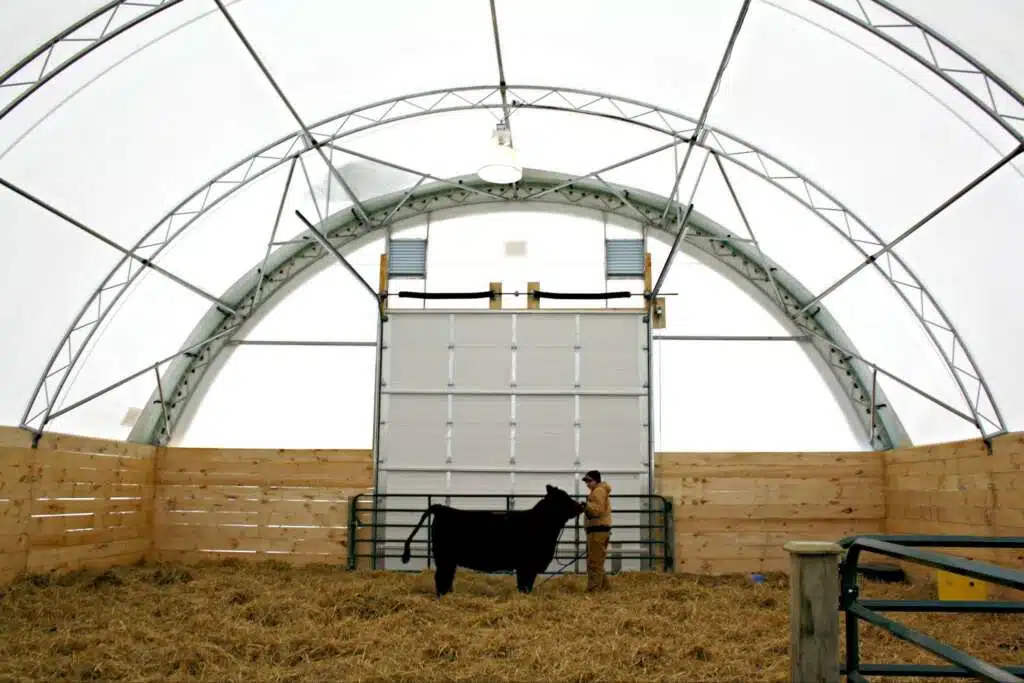
3. Natural Light Enhances Animal Well-Being
Fabric membranes allow more natural light into the interior than conventional metal or wood construction, which reduces the need for artificial lighting. This gentle, evenly distributed daylight helps:
- Create a more comfortable living environment
- Keep animals active and less stressed
- Lower energy usage for lighting
Traditional barns often require extensive lighting systems to compensate for blocked or dim natural light, adding cost and complexity to daily operations.
4. Lower Maintenance Over Time
Traditional barns often require ongoing maintenance such as repainting, replacing rotted wood, or repairing metal panels. Fabric-covered buildings, on the other hand, are engineered to resist corrosion and degradation:
- Hot-dipped galvanized steel frames provide long-lasting strength
- High-density fabric covers are UV-resistant
- Fewer elements to repair or replace over the years
The result? Less time and money spent on maintenance and more focus on what matters, your animals and your business.
5. Better Environmental Flexibility
One of the major strengths of fabric-covered shelters is adaptability. Unlike fixed traditional barns, many fabric structures are:
- Expandable — you can increase the length or modify the layout
- Relocatable — structures can move as your operation evolves
- Customizable — clear-span designs create open, flexible interior space for feed storage, equipment, or animal housing.
This flexibility means your investment works harder for you over time, adjusting to changing needs without tearing down and rebuilding.
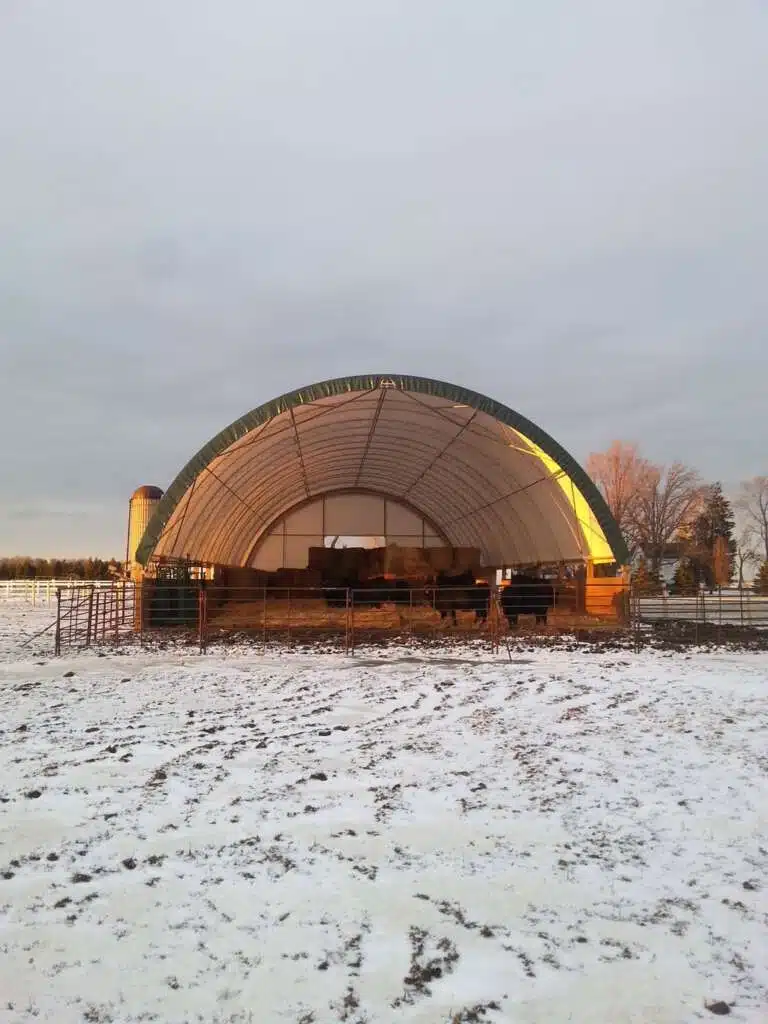
Real Farm Benefits: What Farmers Are Seeing
Livestock producers who choose fabric-covered structures commonly report:
- Lower construction and operating costs
- Faster setup with minimal disruption
In many regions, producers also appreciate how fabric buildings handle weather extremes, shedding snow and withstanding high winds when properly engineered and anchored.
Common Questions About Fabric-Covered Livestock Shelters
Q: Are fabric-covered structures strong enough for livestock?
A: Yes. When properly engineered, like GGS structures, fabric-covered buildings have steel frames and tensioned fabric membranes designed to withstand snow loads, wind, and daily use on farms. They are certified for structural performance and can be customized for local environmental conditions.
Q: Do fabric-covered buildings handle snow and wind?
A: Absolutely. When designed with proper engineering, the steel framing and bracing systems support heavy loads, provide increased wind resistance compared to temporary structures or basic pole barns, and are designed to shed snow efficiently, allowing buildup to slide off rather than accumulate and stress the structure.
Q: Are Fabric-covered structures more cost-effective than traditional barns?
A: In most cases, yes. Fabric buildings typically cost less per square foot, require less labor to install, and reduce ongoing maintenance expenses compared to conventional barns. The overall lower lifecycle cost is a major reason producers are making the switch.
Final Thoughts
Choosing the right shelter for your livestock is a business decision, an animal-welfare decision, and a long-term investment. Fabric-covered structures from GGS Greenhouse Structures offer:
- Quicker installation
- Lower overall costs
- Better environments for animals
- Flexible, customizable designs
- Durable performance backed by engineering expertise
Whether you’re housing cattle, sheep, goats, horses, pigs, or poultry, fabric-covered buildings are a smarter way to shelter livestock, bringing better outcomes for your animals and your operation.