

In quarrying, mining, and bulk materials handling, storage is not a passive function. It directly impacts product quality, operational efficiency, environmental compliance, and ultimately, profitability. Whether storing frac sand, crushed stone, or processed aggregates, the right storage solution must perform under demanding conditions.
Fabric structures have emerged as a preferred solution across the mining and aggregates sector, offering a balance of durability, scalability, and operational efficiency that traditional buildings often struggle to match.
But not all storage solutions are equal. To support modern materials handling operations, fabric structures must meet specific performance requirements.
Why Storage Matters in Aggregate and Mining Operations
Sand and aggregate materials are foundational to infrastructure, construction, and energy production. However, they are also highly vulnerable to environmental exposure.
Unprotected stockpiles can:
- Absorb moisture, reducing usability and increasing processing costs
- Become contaminated with debris or fines
- Be lost to wind displacement
- Contribute to runoff and environmental compliance issues
According to industry insights, storing aggregates outdoors can lead to material degradation and loss, especially when exposed to rain, snow, and wind.
For high-volume operations, these inefficiencies scale quickly. What looks like a minor loss at the pile level can translate into significant cost leakage across a site.
What Materials Handling Operations Require from Storage Structures
1. Weather Protection and Material Integrity
At a minimum, storage structures must shield aggregates from precipitation and wind. Moisture control is critical, particularly in:
- Frac sand operations
- Ready-mix concrete supply chains
- Asphalt production facilities
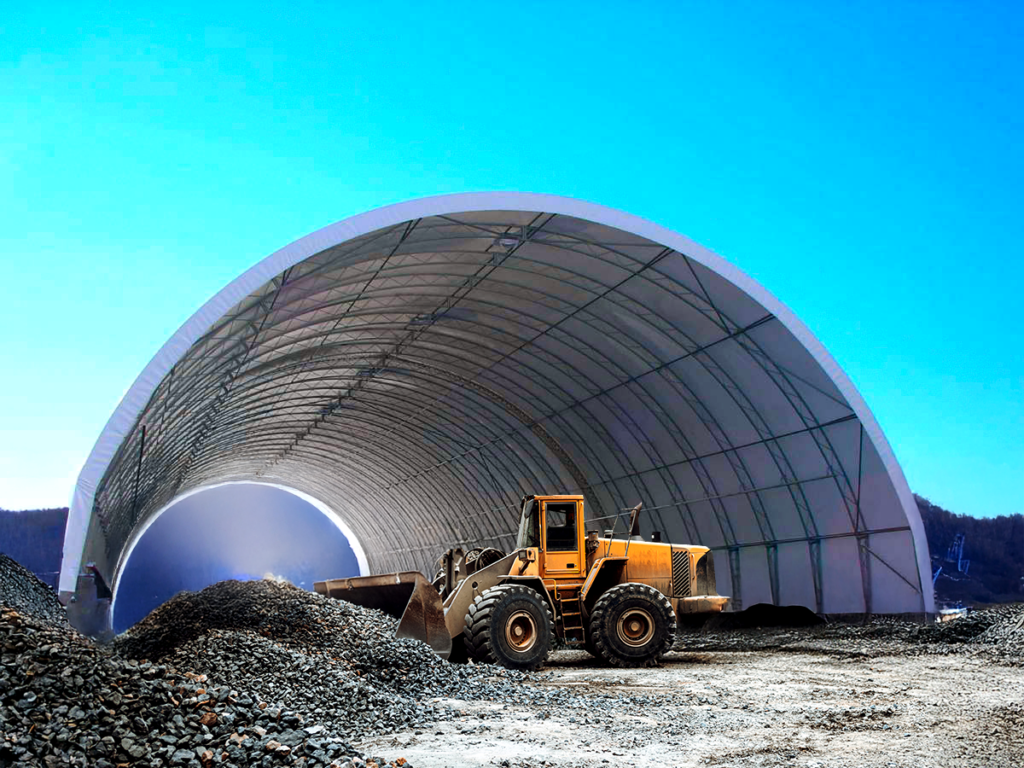
Fabric structures provide enclosed environments that protect materials from environmental exposure, helping maintain consistent moisture levels and usability.
This is especially important in mining operations where material consistency directly impacts downstream processing and product quality.
2. Clearspan Design for Equipment Efficiency
Modern aggregate operations rely on heavy equipment such as:
- Front-end loaders
- Conveyor systems
- Haul trucks
Fabric structures are typically engineered with clearspan interiors, meaning there are no internal columns or supports. This allows unrestricted movement of equipment and maximizes usable storage volume.
For high-throughput facilities, this translates into:
- Faster load-in/load-out cycles
- Reduced equipment bottlenecks
- Improved safety for operators
3. High Clearance and Scalable Capacity
Aggregate piles are not static. They fluctuate based on production cycles, demand, and logistics.
Storage structures must accommodate:
- Large pile heights
- Variable volumes
- Expansion over time
Fabric buildings can be designed with tall peak heights and can be extended in length as operational needs grow.
This scalability is particularly valuable for mining operations where production levels can shift rapidly based on market demand.
4. Fast Deployment and Minimal Downtime
In mining and quarry environments, time is a critical factor. Delays in infrastructure development can stall production or limit capacity.
Traditional steel or concrete buildings can take months to construct. In contrast, fabric structures can often be installed in a matter of weeks, significantly reducing project timelines.
For operations expanding capacity or entering new markets, this speed provides a competitive advantage.
5. Durability in Harsh Environments
Mining and aggregate sites are tough environments, with exposure to:
- Heavy winds
- Snow loads
- Abrasive dust
- Corrosive materials
Fabric structures are engineered to meet local wind and snow load requirements while using corrosion-resistant materials that require minimal maintenance.
This durability reduces long-term operating costs and ensures consistent performance in demanding conditions.
6. Environmental Compliance and Site Control
Regulatory pressure is increasing across mining and aggregate industries, particularly around:
- Dust control
- Runoff management
- Material containment
Enclosed fabric structures help operations:
- Minimize airborne particulate matter
- Prevent contamination of the surrounding land and water
- Maintain compliance with environmental regulations
7. Cost Efficiency and Operational ROI
From a financial perspective, fabric structures offer:
- Lower cost per square foot compared to traditional buildings
- Reduced maintenance requirements (no rust, no repainting)
- Lower energy usage due to natural daylighting
For mining and quarry operators managing tight margins and high volumes, these savings add up quickly.
Key Use Cases in Mining and Quarry Operations
Fabric structures are used across a wide range of aggregate and mining applications, including:
- Sand and frac sand storage
- Crushed stone and gravel storage
- Salt and deicing material storage
- Bulk material blending and staging
- Equipment and fleet storage
Their versatility makes them suitable for both permanent installations and temporary expansions.
Designing the Right Fabric Structure for Your Operation
Not all fabric structures are created equal. For mining and aggregate applications, design considerations should include:
- Foundation type (concrete, ecology blocks, or anchors)
- Ventilation and airflow for dust control
- Access points for large equipment
- Integration with conveyors and material handling systems
- Lighting for safe, efficient operations
Working with an experienced provider ensures the structure is engineered specifically for the demands of your site.
The Strategic Advantage of Fabric Structures
For modern materials handling operations, storage is no longer just about containment. It is about control, efficiency, and scalability.
Fabric structures provide a strategic advantage by:
- Protecting valuable materials
- Improving operational flow
- Reducing environmental risk
- Enabling faster expansion
In an industry where margins are tight and performance matters, these advantages can have a measurable impact.

Frequently Asked Questions (FAQ)
What is a fabric structure for aggregate storage?
A fabric structure is an engineered building that uses a tensioned fabric membrane over a steel frame to create a durable, enclosed space for bulk material storage such as sand, gravel, and crushed stone.
Why are fabric structures used in mining and quarry operations?
They are used because they provide fast, cost-effective, and scalable storage solutions that protect materials from weather, improve handling efficiency, and support environmental compliance.
How do fabric structures improve material quality?
By shielding aggregates from rain, snow, and wind, fabric structures help maintain consistent moisture levels and prevent contamination, which is critical for downstream processing and product performance.
Are fabric structures durable enough for harsh mining environments?
Yes. Modern fabric structures are engineered to meet local wind and snow load requirements and are built with corrosion-resistant materials suitable for demanding industrial environments.
Can fabric structures be expanded as operations grow?
Yes. One of the key advantages is modular scalability. Structures can be lengthened or modified to accommodate increased storage needs over time.
How quickly can a fabric structure be installed?
Installation timelines are significantly shorter than traditional buildings. Many fabric structures can be designed and installed within weeks, depending on size and complexity.
Do fabric structures help with environmental compliance?
Yes. They help control dust, prevent runoff contamination, and support regulatory compliance by enclosing materials and reducing environmental exposure.
What industries benefit most from fabric aggregate storage?
Industries include:
- Mining and quarrying
- Construction materials production
- Asphalt and concrete plants
- Municipal and DOT operations
Explore Smarter Storage with GGS
For mining and aggregate operations looking to improve efficiency, protect materials, and scale with confidence, fabric structures offer a proven solution.
Explore how GGS Greenhouse Systems can support your bulk storage needs with engineered fabric structures designed for the demands of industrial materials handling.