Quick Answer: Fabric building cost depends on the building’s size, steel frame, fabric cover, foundation and local weather requirements. Site preparation, doors, permits and installation also affect the total cost. Compare quotes based on specifications and long-term maintenance, not just the upfront price.
What will this cost me? It’s the first question most buyers ask when planning a fabric building. The answer depends on your building’s size, materials, foundation, and site requirements.
Fabric buildings offer faster installation, natural daylight, and the flexibility to relocate certain structures. Natural lighting can also reduce reliance on artificial lighting, helping lower lighting energy use.
Two buildings of the same size can have different fabric building costs because of variations in steel framing, fabric quality, engineering requirements, and installation.
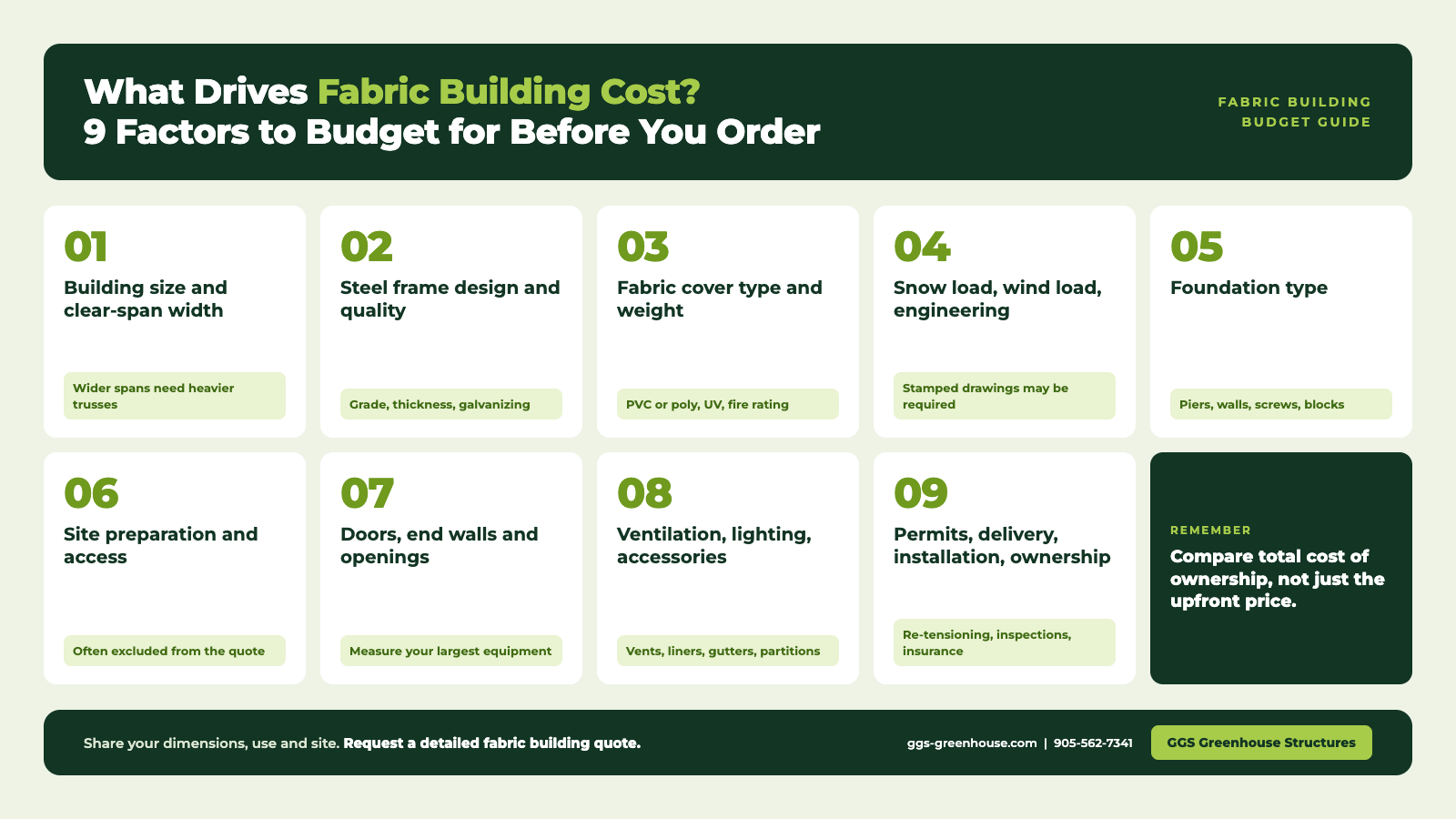
Understanding these nine factors will help you compare quotes fairly and plan a realistic fabric building budget before you order.
1. Building Size and Clear-Span Width
Your building’s width, length, and height are major factors affecting fabric building cost. A wider clear-span fabric building often requires heavier steel trusses to support the roof without interior columns, which can increase the overall cost.
If you need more space, extending the building’s length through standard bays may be more economical than increasing its width. The best option depends on your storage needs and the building’s design.
Budget tip: Plan your fabric building budget around your equipment, materials, or livestock, leaving enough room for daily operations and future growth.
2. Steel Frame Design and Material Quality
The steel frame affects your building’s strength, durability, and long-term maintenance needs. A single-truss design may suit certain spans and load requirements, while a double-truss configuration may be appropriate for other structural demands.
Steel grade and thickness also affect the cost of a fabric building. A lighter frame may cost less upfront but may not meet your structural requirements. For a steel frame fabric building, hot-dip galvanized steel helps resist corrosion in environments exposed to moisture, salt, or manure.
Ask your supplier: “What steel specifications and protective coating are included in the quote?”
3. Fabric Cover Type and Weight
The fabric cover affects your building’s durability, light transmission, and replacement schedule, all of which can influence the fabric structure price. PVC and polyethylene covers differ in strength, flexibility, lifespan, and price, so compare product specifications before choosing one for your application.
Fabric weight, UV protection, and fire rating also influence your choice. GGS offers fabric-covered structures for different applications, so confirm the available cover specifications and warranty terms before ordering.
Budget tip: A higher-grade cover may increase your initial cost, but its longer service life could delay replacement and reduce long-term expenses.
4. Snow Load, Wind Load, and Engineering
Your local climate determines the snow and wind loads your building must withstand. These requirements affect the steel frame, connections, and anchoring system, influencing the overall fabric building cost.
Depending on your location and project, building permits and insurers may require stamped engineering drawings. Building codes also vary across Ontario and other parts of North America, so confirm the applicable requirements before ordering.
Important: A frame designed for milder weather may cost less upfront, but it may not withstand local conditions or meet building codes. Choose a design engineered for your site’s specific snow and wind loads to avoid costly modifications and potential safety risks.
5. Foundation Type
Your foundation affects installation costs, building height, and whether you can relocate the structure later. Options include concrete piers, pony walls, ground screws, concrete blocks, and container mounts. The right choice depends on your soil conditions, building design, and intended use.
Concrete walls raise the fabric cover above ground level, helping protect it from equipment damage. More permanent foundations may require additional site work and make relocation more difficult.
Budget tip: Ask your supplier which foundation best suits your soil conditions and intended use. Choosing the right foundation for your fabric building early can help you manage your fabric building budget and avoid unnecessary installation costs.
6. Site Preparation and Access
Your site conditions can add to the overall fabric building cost before installation begins. Grading, soil compaction, and drainage may be necessary to create a stable, level surface and prevent water from collecting around the structure.
Depending on your intended use, you may need a gravel pad or concrete floor. Delivery trucks and lifting equipment must also have enough room to reach the site safely.
Budget tip: Site preparation and access work are often excluded from the building quote. Get a separate estimate to account for these expenses before ordering.
7. Doors, End Walls, and Openings
Your choice of end walls and doors affects the building’s cost and everyday usability. Open ends may suit some storage needs, while fully enclosed end walls provide greater protection from the elements. Roll-up, sliding, overhead, and walk-through doors offer different access options.
Door size and placement matter when you move equipment or materials frequently. Undersized openings can restrict access and lead to costly modifications later.
Budget tip: Measure your largest tractor, loader, or truck, and plan door sizes and locations around your daily traffic flow.
8. Ventilation, Lighting, and Accessories
Your building’s ventilation and accessories affect its performance and suitability for your intended use. Ridge vents, fans, and roll-up sidewalls help manage airflow and condensation, reducing moisture buildup that could affect stored materials and equipment.
Fabric covers allow natural light into the space, potentially reducing the need for electrical lighting during the day. Liners, insulation, gutters, and partitions can improve functionality but may increase the overall fabric building cost.
Remember: Good airflow helps protect your contents and the building, so account for ventilation needs before finalizing your design.
9. Permits, Delivery, Installation, and Long-Term Ownership
Permit fees and approval timelines vary by location and project requirements. Freight costs depend on delivery distance and load size, while installation expenses vary depending on whether you hire professionals or handle the work yourself with supplier guidance.
Your fabric building budget should also account for ongoing expenses, including re-tensioning, inspections, potential cover replacement, and insurance. These costs can add up over the building’s lifespan.
Budget tip: Compare the total cost of ownership over the building’s expected service life rather than choosing a structure based solely on its initial purchase price.
Quick Budget Checklist Before You Request a Quote
Before requesting a fabric building quote, gather the details your supplier needs to understand your project. Use this checklist to prepare:
- Intended use and space: Specify what you’ll store and the interior dimensions required.
- Site location: Identify local snow and wind load requirements.
- Foundation: Note your preferred foundation type.
- Doors and openings: List the number and sizes needed for your equipment.
- Cover material: Specify your preferred fabric type.
- Ventilation and lighting: Outline your airflow and lighting needs.
- Timeline and permits: Share your target installation date and permit status.
Plan Your Fabric Building With GGS
The lowest fabric building cost doesn’t always mean the best long-term value. Material quality, structural design, site requirements, and maintenance all influence what you’ll spend over time.
With decades of experience in steel-frame greenhouse manufacturing and engineered, custom fabric structures, GGS Greenhouse can help you find a solution that fits your needs.
Share your building dimensions, intended use, and site requirements to request a detailed fabric building quote. Tell us what you need to store, and we’ll help you build around it.