When it comes to protecting your cattle, not every barn is built for the same conditions. From hot, humid summers to freezing winters, your climate plays a major role in determining which type of livestock housing will work best for your operation.
For cattle producers considering fabric-covered cattle buildings, one of the biggest decisions is whether to choose an open-air or enclosed structure. Both offer advantages, but the right choice depends on your herd, regional weather conditions, ventilation requirements, and day-to-day operations. Understanding these differences can help you invest in a building that supports animal comfort, improves efficiency, and provides reliable protection throughout the year.
What Is the Difference Between Open-Air and Enclosed Fabric Cattle Buildings?
Fabric cattle buildings use engineered steel frames and durable fabric coverings to create protected spaces for livestock. Unlike traditional wood or metal barns, these structures can provide large, unobstructed interiors, natural daylight, and flexible configurations. The primary difference between open-air and enclosed designs comes down to airflow and weather protection.
Open-Air Fabric Cattle Buildings
Open-air cattle buildings typically feature a fabric-covered roof with partially or fully open sides, allowing fresh air to circulate naturally throughout the structure. These buildings are commonly used for feeding areas, beef cattle housing, and operations where airflow and shade are major priorities. Benefits of open-air designs include:
- Natural ventilation that helps remove excess heat and moisture
- Shade during hot summer months
- Protection from direct rainfall and snowfall
- Easy access for feeding, cleaning, and equipment
- Potentially lower construction costs when fewer walls and enclosure components are required
However, open sides also mean increased exposure to wind-driven rain, snow, and cold drafts. Building orientation and placement become especially important in regions with unpredictable weather.
Enclosed Fabric Cattle Buildings
Enclosed fabric cattle buildings incorporate additional sidewalls, end walls, doors, or adjustable openings to provide greater protection from outdoor conditions. These structures may be beneficial for producers who experience harsh winters, strong winds, or frequent precipitation. Advantages of enclosed designs include:
- Greater protection from wind, rain, and snow
- More flexibility in managing the interior environment
- Improved shelter for feeding and resting areas
- Options for adjustable ventilation systems
- Flexible layouts for livestock handling and farm equipment
While enclosed buildings provide more weather protection, they still require properly designed ventilation. Without sufficient airflow, moisture, ammonia, and heat can accumulate inside, potentially affecting cattle comfort and air quality.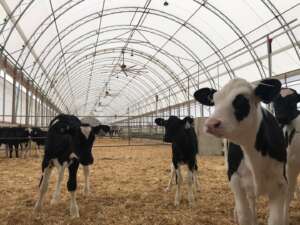
Why Climate Matters When Choosing a Cattle Building
Your local climate should be one of the first considerations when planning a livestock fabric structure. A building that performs well in a warm, breezy region may require a different configuration in an area with heavy snowfall and prolonged freezing temperatures.
Hot and Humid Climates: Prioritize Airflow
Heat stress is a major concern for cattle producers during warmer months. High temperatures combined with humidity can make it difficult for cattle to regulate body heat, potentially affecting feed intake and productivity. In these conditions, open-air fabric cattle buildings may offer significant advantages.
Natural airflow helps carry excess heat and moisture away from animals, while the fabric roof provides shade from direct sunlight. However, an open-sided structure alone does not guarantee adequate cooling. During periods of extreme heat or limited wind, supplemental fans or other cooling measures may still be necessary.
Best considerations for hot climates:
- Open sides that encourage cross ventilation
- Building orientation that takes advantage of prevailing winds
- Adequate roof height and interior air volume
- Supplemental cooling options when needed
For operations in warmer regions, a well-designed open-air structure can provide a practical balance between shade, airflow, and operational accessibility.
Cold and Snowy Climates: Balance Protection and Ventilation
In colder climates, cattle producers face a different set of challenges, including freezing winds, snow accumulation, and wet bedding. Enclosed or partially enclosed fabric cattle buildings can provide additional protection during harsh winter conditions. However, keeping cattle comfortable does not necessarily mean keeping the building warm.
Cattle generate significant heat and moisture, making ventilation essential even during winter. Restricting airflow too much can create humid conditions, increase condensation, and contribute to poor air quality. For colder regions, the ideal solution may involve adjustable sidewalls or curtains that provide protection from harsh weather while maintaining necessary air exchange.
Best considerations for cold climates:
- Engineered structures designed for local snow and wind loads
- Strategic protection against prevailing winter winds
- Adjustable ventilation openings
- Proper drainage and bedding management
- Adequate airflow to reduce moisture and condensation
The goal is to protect cattle from severe weather without trapping excess humidity inside the building.
Regions With Four Distinct Seasons: Consider Flexibility
For farms in regions with hot summers and freezing winters, adaptability is especially important. A partially enclosed fabric building with adjustable ventilation features may offer the flexibility needed to respond to changing weather conditions. During summer, openings can allow increased airflow. In winter, adjustable sides can help limit direct wind exposure while preserving ventilation. Rather than choosing a completely open or fully enclosed design, some producers may benefit from a customized configuration that supports seasonal adjustments.
How Ventilation Impacts Cattle Health and Building Performance
Regardless of climate, ventilation is one of the most important factors in cattle housing design.
Cattle naturally produce heat and moisture through respiration, while manure and bedding contribute additional humidity and gases to the surrounding environment. Without proper ventilation, these conditions can lead to condensation, ammonia buildup, and reduced air quality. Open-air structures typically rely on natural ventilation, using wind and building openings to exchange indoor and outdoor air. Enclosed fabric cattle buildings may require strategically positioned vents, adjustable curtains, or mechanical ventilation systems to maintain appropriate airflow. The right approach depends on several factors, including herd size, stocking density, building dimensions, and seasonal weather patterns.
The key takeaway: More enclosure does not automatically mean better protection. Effective livestock housing balances weather coverage with consistent access to fresh air.
Comparing Open-Air and Enclosed Fabric Cattle Buildings
| Factor | Open-Air Buildings | Enclosed Buildings |
| Ventilation | Primarily natural airflow | Requires planned ventilation openings or systems |
| Summer Performance | Strong potential for natural cooling | May require additional airflow management |
| Winter Protection | More exposure to wind and blowing snow | Greater protection from harsh weather |
| Weather Flexibility | Depends on building orientation and configuration | Can offer greater control with adjustable features |
| Construction Cost | May cost less with fewer enclosure components | Additional walls, doors, and ventilation features may increase costs |
| Ideal Applications | Feeding areas, shade, and naturally ventilated livestock housing | Operations needing additional weather protection |
Both options can provide valuable benefits depending on the needs of your operation.Ultimately, the best design is one that supports your cattle and your workflow without adding unnecessary building costs or maintenance requirements.
What Should You Consider Before Investing in a Fabric Cattle Building?
Before selecting a structure, consider how the building will function throughout the year, not just during one season.
- Your Herd’s Needs
Beef cattle, dairy cattle, calves, and other livestock groups may have different environmental requirements. Consider animal age, herd size, stocking density, and how the space will be used.
- Local Weather Patterns
Evaluate summer temperatures, humidity, prevailing winds, average snowfall, and extreme weather exposure. These factors influence the appropriate level of enclosure and structural engineering.
- Feeding and Equipment Access
A livestock building needs to accommodate everyday farm operations. Consider access for feed trucks, tractors, manure removal equipment, and cattle movement.
- Ventilation and Moisture Control
Plan how fresh air will enter and exit the structure during every season. Drainage, bedding management, and moisture removal are equally important.
- Long-Term Costs and Expansion
Think beyond the initial installation. Building dimensions, enclosure features, maintenance, and future herd expansion can all influence the long-term value of your investment.
Why Choose GGS Fabric-Covered Structures for Cattle Housing?
At GGS, we understand that livestock housing needs to work as hard as the producers who depend on it. Our fabric-covered structures are designed to provide durable, practical shelter for agricultural operations, with configurations that can accommodate different livestock housing needs. With hot-dip galvanized steel frames, durable fabric coverings, and spacious interiors, GGS structures offer an alternative to conventional livestock buildings.
Our solutions can be customized around important operational requirements, including building dimensions, equipment access, ventilation, and local weather conditions. Whether you’re looking to cover an existing feeding area or develop a larger cattle housing facility, choosing the right structure begins with understanding your herd and environment.
Find the Right Fabric Cattle Building for Your Operation
When comparing open-air and enclosed fabric cattle buildings, there is no one-size-fits-all answer. Open-air structures may be ideal for operations prioritizing natural ventilation, shade, and easy access. Enclosed configurations can provide additional weather protection in colder or more exposed locations, provided ventilation remains a priority. The best investment is a building designed around your cattle, climate, and long-term farm goals.
Ready to explore fabric-covered cattle housing solutions? Contact GGS to discuss your operation and find a structure that fits your needs.
Frequently Asked Questions About Fabric Cattle Buildings
Are open-air cattle buildings suitable for winter?
Yes, open-air cattle buildings can be used in cold climates when they are properly designed for local conditions. However, protection from prevailing winds, snow, and wet bedding conditions is important. Partially enclosed designs may provide additional shelter where needed.
Do enclosed fabric cattle buildings need ventilation?
Yes. Enclosed livestock buildings require consistent air exchange to remove heat, humidity, and gases. Ventilation may be provided through natural openings, adjustable curtains, mechanical systems, or a combination of these methods.
Are fabric cattle buildings cheaper than traditional barns?
Fabric-covered cattle buildings can be a cost-effective alternative to traditional construction, particularly when large clear-span interiors are needed. Actual costs depend on the building’s dimensions, foundation, enclosure features, engineering requirements, and installation.
Can fabric cattle buildings withstand heavy snow and wind?
Fabric-covered structures can be engineered to meet location-specific snow and wind load requirements. Proper structural design, foundations, and anchoring are essential to ensuring the building is appropriate for its environment.
Which type of cattle building is best for hot climates?
Open-air or naturally ventilated cattle buildings are often well suited for warmer climates because they allow fresh air to circulate while providing shade. However, additional cooling and ventilation equipment may be necessary during extreme heat or low-wind conditions.