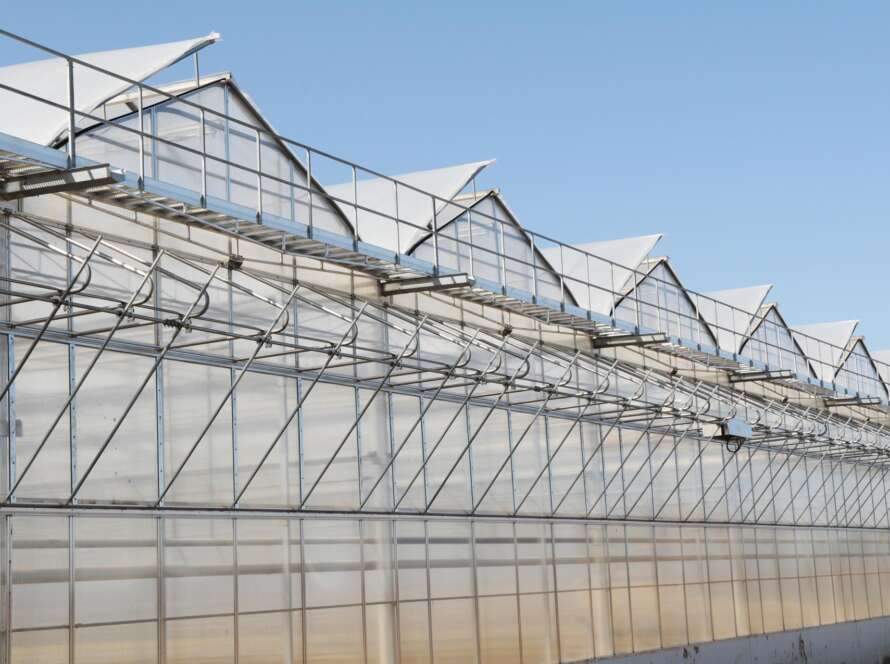
A greenhouse can have the best heating equipment on the market and still struggle to maintain consistent growing conditions.
Hot spots, excessive humidity, poor airflow, and fluctuating temperatures are challenges commercial growers know all too well. And when climate conditions become unpredictable, crop quality, production schedules, and operating costs can take a hit.
The solution isn’t always more equipment. Sometimes, it’s how the greenhouse itself is designed. Freestanding greenhouses give growers the flexibility to create independent growing environments, but achieving consistent climate control takes careful planning.
Step 1: Understand Your Crop’s Climate Requirements
Before choosing a heating system, ventilation strategy, or greenhouse covering, start with what you’re growing. Different crops have different environmental requirements. Even the same crop may need different conditions during propagation, vegetative growth, and finishing.
Consider:
- Temperature: What are the ideal daytime and nighttime ranges?
- Humidity: What conditions support healthy growth without encouraging disease?
- Airflow: How much circulation is needed throughout the crop canopy?
- Light: Will the crop require supplemental lighting or shade?
- Seasonality: Will production continue through winter or only during certain months?
One advantage of freestanding greenhouses is the ability to manage separate structures independently. For operations growing multiple crops, this can mean maintaining different temperatures and humidity levels without compromising conditions across the entire facility.
Grower tip: Plan for what you expect to grow three to five years from now, not just what’s currently on the benches.
Step 2: Choose a Greenhouse Structure That Supports Climate Control
The structure plays a bigger role in climate management than many people realize. Greenhouse shape, covering material, orientation, and ventilation openings all influence how heat, moisture, and air move through the growing environment. When evaluating a freestanding structure, pay attention to three factors.
Covering materials
Glass, polycarbonate, and polyethylene coverings offer different combinations of light transmission, insulation, durability, and initial cost. The right choice depends on your growing requirements, local climate, and long-term operating goals.
Greenhouse dimensions
Width, height, and roof design affect interior air volume, ventilation performance, and heating requirements.
Climate adaptability
A greenhouse designed for a mild climate may require different features than one operating through freezing temperatures, heavy snow, or extreme summer heat.
Grower tip: Don’t evaluate greenhouse structures on upfront cost alone. Consider how the design will affect heating, cooling, and energy use over the building’s lifespan.
Step 3: Build a Temperature Management Strategy
Maintaining the right temperature isn’t just about keeping the greenhouse warm during winter. Commercial greenhouses also need to manage rapid daytime temperature increases, nighttime heat loss, and uneven temperatures throughout the structure. A well-designed temperature management strategy may include:
- Properly sized heating equipment
- Heating distribution throughout growing areas
- Energy curtains or thermal screens
- Ventilation and evaporative cooling where appropriate
- Insulated covering options
- Automated temperature controls
The challenge is getting these systems to work together. For example, heating the greenhouse while leaving ventilation openings unnecessarily exposed can waste energy. Closing everything too tightly, however, can create humidity problems. Effective climate control balances plant requirements with energy efficiency.
Grower tip: Monitor temperatures at multiple points in the greenhouse, particularly near exterior walls, doors, and different crop zones. One thermostat rarely tells the whole story.
Step 4: Design Ventilation for Consistent Air Exchange
Ventilation is one of the most important parts of greenhouse climate management. Without adequate ventilation, heat and humidity can accumulate quickly, especially during periods of high solar gain or intensive production. Freestanding greenhouses can incorporate several ventilation strategies.
Natural ventilation
Roof vents, side vents, and roll-up sides allow air to move through the greenhouse using natural temperature differences and wind.
Mechanical ventilation
Exhaust fans and strategically placed air inlets provide more controlled air exchange when natural ventilation is insufficient.
Combination systems
Some operations benefit from using natural and mechanical ventilation together, depending on the season and outdoor conditions. The best approach depends on the structure, crop requirements, and local climate.
Grower tip: Evaluate ventilation requirements before finalizing your greenhouse footprint. Retrofitting adequate ventilation into an existing design can be more complicated and expensive.
Step 5: Manage Humidity Before It Becomes a Problem
Humidity is easy to overlook until condensation appears or disease pressure increases. Commercial greenhouses generate substantial moisture through irrigation, plant transpiration, and wet growing surfaces. During cooler weather, growers often face a difficult balance: retain heat without trapping excessive moisture. Practical humidity management strategies include:
- Maintaining consistent air circulation
- Coordinating heating and ventilation
- Monitoring relative humidity and vapor pressure deficit (VPD)
- Adjusting irrigation timing
- Reducing unnecessary standing water
- Using mechanical dehumidification where appropriate
Humidity should be considered alongside temperature, not managed as an entirely separate system.
Grower tip: Pay particular attention to overnight humidity. Falling temperatures can increase relative humidity and condensation risk even when no additional moisture enters the greenhouse.
Step 6: Eliminate Stagnant Air and Uneven Growing Conditions
Ventilation and air circulation aren’t the same thing. Ventilation exchanges indoor air with outdoor air. Circulation helps distribute air throughout the greenhouse. Without proper circulation, growers may experience warm areas near heating equipment, cooler spaces around exterior walls, or pockets of stagnant air within dense crops. Horizontal airflow (HAF) fans and other circulation systems can help improve temperature uniformity and reduce stagnant conditions.
However, airflow performance also depends on the greenhouse layout. Benches, hanging baskets, tall crops, and equipment can all interfere with circulation.
Grower tip: Reevaluate airflow whenever production layouts change. A circulation system designed for young plants on open benches may perform differently once the space contains mature, dense crops.
Step 7: Connect Everything With Environmental Controls
Once the structure and mechanical systems are in place, environmental controls help coordinate their performance. Modern greenhouse control systems can monitor environmental conditions and automatically adjust equipment based on programmed targets. Depending on the operation, these systems may manage:
- Heating and cooling
- Ventilation equipment
- Air circulation
- Shade and energy curtains
- Humidity management
- Supplemental lighting
- Environmental alarms
For commercial growers managing multiple freestanding greenhouses, independent control zones can be particularly valuable. Each structure can respond to its specific crop requirements without relying on one set of conditions across the entire operation.
But remember: automation improves the performance of properly designed systems. It cannot completely compensate for an undersized heater, inadequate ventilation, or poor airflow distribution. Although the environmental control system adapts to changing climate conditions, a weekly check of setpoints is required by the grower to maintain optimal growing conditions. Seasonality setpoint checks are also important well before outdoor climatic changes.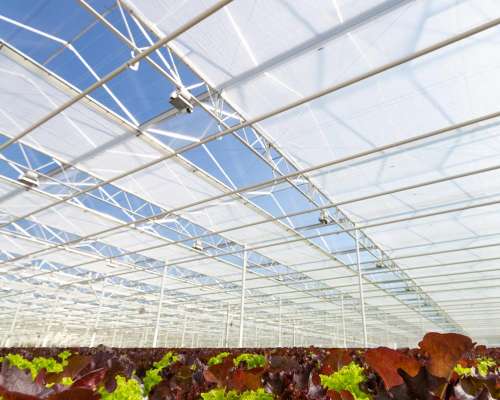
Step 8: Monitor Performance and Adjust as Production Changes
Climate control isn’t a one-time setup. Outdoor conditions change throughout the year, crops mature, and growing layouts evolve. Even a well-designed greenhouse benefits from regular performance reviews. Use this checklist to evaluate your greenhouse throughout the growing season:
- Review daytime and nighttime temperature trends.
- Check for hot and cold spots across production areas.
- Monitor humidity and condensation patterns.
- Inspect ventilation openings and mechanical equipment.
- Confirm circulation fans are operating and unobstructed.
- Review heating performance and energy consumption.
- Calibrate environmental sensors as recommended.
- Adjust control settings for seasonal and crop changes.
Regular monitoring helps identify small climate inconsistencies before they become larger production problems.
Better Climate Control Begins With Better Greenhouse Design
A reliable growing environment isn’t created by one heater, fan, vent, or automated controller. It’s created by a greenhouse designed to make those systems work together. For commercial growers, freestanding structures offer the opportunity to create independent, crop-specific environments while planning for ventilation, heating, humidity management, and future production changes. The earlier those decisions are made, the easier it becomes to build a greenhouse around the operation’s actual needs.
Build a Greenhouse That Works as Hard as You Do.
Whether you’re expanding production, replacing an aging structure, or planning a new growing facility, GGS Structures can help you evaluate freestanding greenhouse designs and climate systems built around your crops, location, and long-term goals.