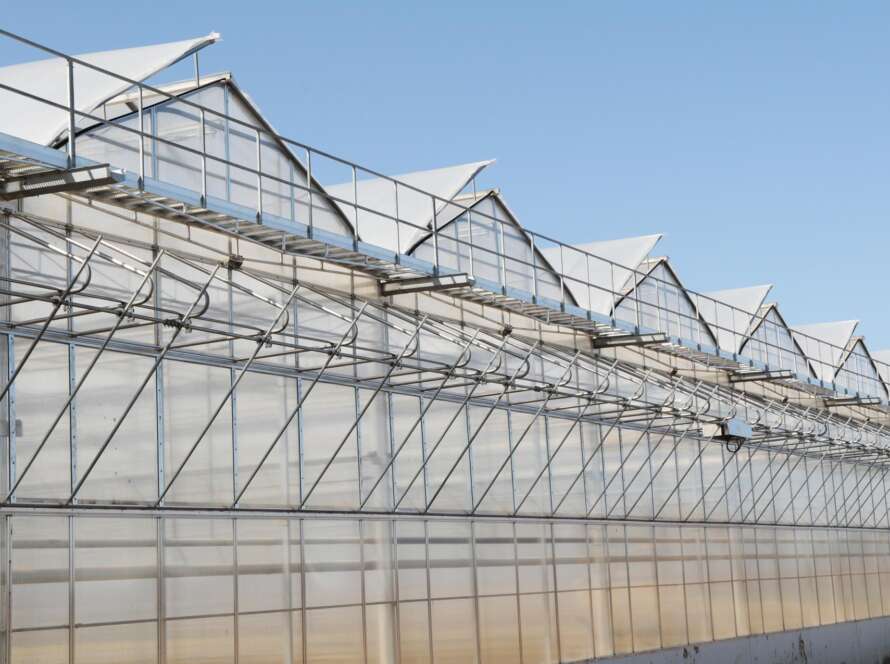
Growing thousands of uniform plants week after week is one job. Supporting controlled experiments, plant pathology research, teaching labs, and faculty projects is another.
For commercial growers, greenhouse design is typically driven by production efficiency, crop quality, labor, energy use, throughput, and return on investment. Universities and research institutions share many of those concerns, but they also need greater flexibility, environmental precision, compartmentalization, data collection, and separation between experiments.
That difference should shape the greenhouse from the beginning.
Research and university greenhouse design typically prioritizes environmental control, independent growing zones, flexible infrastructure, monitoring, biosecurity, and experimental consistency. Commercial greenhouse design generally places more emphasis on production flow, usable growing area, labor efficiency, crop throughput, and operating cost.
Why Research Greenhouse Design Is Different
A commercial greenhouse may dedicate an entire bay or range to crops with similar environmental requirements. A university greenhouse can look very different. One compartment might hold a water deficit trial. Another could support plant breeding. A third may be used for plant pathology, while another hosts students learning greenhouse crop production.
These projects may require different temperatures, irrigation schedules, light levels, humidity ranges, or sanitation practices.
That means research greenhouse planning often starts with different questions:
- How many research groups will use the facility?
- How many independent environments are required?
- Could one experiment interfere with another?
- What equipment or sensors will researchers need?
- Will plant pathogens, insects, or sensitive plant material be involved?
- Will students, faculty, visitors, and maintenance teams share the space?
- How could research priorities change in the future?
The answers influence greenhouse compartment size, mechanical systems, utilities, controls, workflow, and expansion planning.
Commercial Greenhouses Optimize Production. Research Greenhouses Optimize Experiments.
The structures may appear similar from the outside, but their operating priorities can be very different.
Commercial greenhouse priorities
Commercial growers generally need greenhouse space that supports consistent production at scale.
Design decisions may focus on:
- Bench or floor-growing space
- Efficient use of energy
- Plant movement
- Irrigation efficiency
- Heating and cooling costs
- Labor flow
- Crop scheduling
- Automation
- Shipping and receiving
- Future production expansion
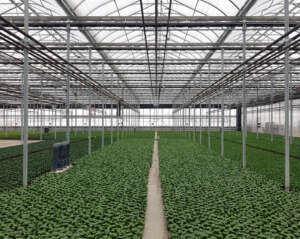
If several bays are growing the same crop under similar conditions, shared systems may be practical and efficient.
Research greenhouse priorities
Research facilities need repeatability for a different reason. Researchers must be confident that environmental conditions are controlled and documented closely enough to support reliable experimental results. That can increase the need for:
- Independent environmental zones
- Accurate sensors
- Data logging
- Separate irrigation controls
- Supplemental lighting
- Shade systems
- Humidity management
- CO2 control
- Alarm systems
- Remote monitoring
For commercial production, better environmental information helps improve crop performance.
For research, that same information may also become part of the experimental record.
Compartmentalization Can Be Critical
One large greenhouse bay may be ideal for efficient commercial production. For research, smaller independently controlled compartments can provide more value. Consider a university running four projects:
- A tomato heat-stress experiment requiring higher temperatures
- A lettuce lighting study using supplemental LEDs
- A plant pathology trial involving infected material
- A breeding project requiring standard growing conditions
Operating all four in one shared environment would create obvious limitations. Separate compartments can allow researchers to control conditions without affecting neighboring studies. Depending on the project, individual zones may require independent:
- Heating
- Ventilation
- Cooling
- Lighting
- Shade
- Irrigation
- Humidity control
- Air circulation
However, more independent zones also mean more equipment, controls, maintenance, and cost. The goal is not to make every compartment completely self-contained. It is to provide the level of separation the research actually requires.
Environmental Control Should Match the Research
A research greenhouse does not automatically need the tightest possible environmental control. Greenhouses are still influenced by solar radiation, outside temperature, humidity, wind, and seasonal changes. The better question is:
How much environmental control does the research need to produce meaningful results?
Some programs may only require reliable temperature control and supplemental lighting. Others may need tighter management of temperature, humidity, light intensity, photoperiod, CO2, irrigation, or nutrient delivery. Overspecifying every greenhouse compartment can increase construction and operating costs unnecessarily. A more practical approach is to define acceptable environmental ranges for each type of research and design the greenhouse systems around those requirements.
Sensors and Data Collection Need to Be Planned Early
Commercial growers increasingly rely on sensors and environmental controls. Research facilities often take that need further. Researchers may need to document exactly what conditions plants experienced throughout an experiment.
Typical instrumentation can include:
- Air temperature sensors
- VPD (vapor pressure deficit)
- Relative humidity sensors
- Light sensors
- CO2 sensors
- Substrate temperature sensors
- Soil moisture sensors
- Irrigation flow meters
- EC or nutrient monitoring
- Data loggers
Universities may also need convenient locations for temporary research equipment. That affects electrical service, network access, mounting locations, bench layouts, control systems, and utility planning. Building flexibility into the infrastructure makes it easier to add new equipment without modifying the greenhouse every time a research project changes.
Biosecurity and Separation Matter
Research greenhouses may contain plant material that needs to remain isolated. That could include:
- Plant disease trials
- Insect research
- Biological controls
- Breeding lines
- Experimental treatments
- Different pesticide programs
- Sensitive plant material
Cross-contamination between compartments can compromise months of research.
As a result, designers may need to consider airflow, drainage, sanitation, access control, personnel movement, and physical separation between spaces. A pathology greenhouse, for example, may require greater isolation than a general teaching greenhouse. These requirements should be identified before deciding how greenhouse compartments connect to headhouses, corridors, laboratories, and adjacent growing areas.
Irrigation Requires More Flexibility
Commercial greenhouse irrigation systems often benefit from standardization. Research facilities may need multiple independent treatment options. One experiment may compare fertilizer rates. Another might test drought stress. A third could evaluate irrigation frequency. If all benches are tied to one irrigation zone, researchers lose that flexibility.
A research greenhouse may benefit from:
- Multiple irrigation zones
- Separate fertilizer injection
- Hand-watering access
- Convenient hose connections
- Drainage collection
- Space for experimental irrigation equipment
- Access to different water sources where required
Drainage also deserves attention. If experiments involve nutrients, pathogens, pesticides, or other treatments, runoff from one project may need to remain separate from another area.
Lighting and Electrical Capacity Are Increasingly Important
Lighting has become a major part of both commercial production and greenhouse research. Commercial growers usually want consistent supplemental light across a production zone. Researchers may intentionally create several different lighting treatments. Studies could compare:
- Light intensity
- Photoperiod
- Light spectrum
- Daily light integral
- Supplemental light versus natural light
That may require independently controlled fixtures and more electrical capacity than a traditional greenhouse design would provide.
Universities should plan not only for the lighting technology being installed today, but also for future equipment. Extra electrical capacity, accessible utility runs, and adaptable controls can make the greenhouse easier to update as research technologies change.
Teaching Greenhouses Add Another Requirement
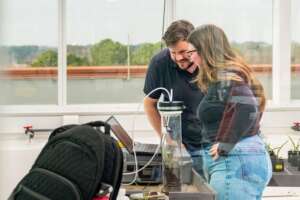
Many university greenhouses are not used exclusively for research. They may also support teaching, tours, extension programs, or public outreach. That changes how the greenhouse needs to function. A production greenhouse may prioritize growing space over circulation. A teaching greenhouse may need additional room for:
- Student groups
- Instructors
- Demonstrations
- Accessible aisles
- Equipment
- Tours
- Observation areas
Institutions should determine early whether the greenhouse is primarily a research facility, teaching greenhouse, production space, or a combination. Trying to make one area serve every purpose without planning for those uses can create compromises later.
Do Not Overlook the Headhouse
Growing space often receives most of the attention during greenhouse planning, but supporting spaces can be just as important. Researchers and greenhouse staff may need areas for:
- Potting
- Media preparation
- Fertilizer storage
- Equipment storage
- Plant preparation
- Sample collection
- Washing and sanitation
- Cold storage
- Data collection
- Offices or workstations
Plants may regularly move between greenhouse compartments, growth chambers, laboratories, and processing spaces. Designing that workflow intentionally can save significant staff time and reduce unnecessary handling.
Efficiency Still Matters
Research flexibility does not eliminate the need to manage operating costs. Universities still need to evaluate:
- Greenhouse glazing
- Heat retention
- Heating efficiency
- Ventilation
- Cooling
- Shade systems
- Thermal curtains
- Supplemental lighting
- Control-system integration
The goal is to find efficiencies that do not compromise the research. For example, a central heating system may serve multiple greenhouse compartments while individual zones maintain different temperature set points. That can provide both flexibility and operational efficiency.
Plan for Research That Has Not Started Yet
One of the biggest mistakes in university greenhouse design is building too specifically around today’s projects. Research changes.
Faculty members join or leave. Grant funding creates new priorities. New crops and technologies become important. Sensors, LEDs, imaging systems, robotics, and automation continue to change. A greenhouse designed around one narrow use can become restrictive quickly. Long-term flexibility may include:
- Modular benches
- Extra electrical capacity
- Expandable control systems
- Multiple irrigation zones
- Accessible utility runs
- Adjustable lighting infrastructure
- Flexible compartment sizes
- Space for new sensors and equipment
- Structural layouts that allow future additions
The objective is not to predict every future experiment. It is to avoid building a facility that prevents them.
Common Research Greenhouse Design Mistakes
Several decisions can limit a facility long after construction is complete.
Designing it like a production greenhouse. Large open bays may improve growing efficiency but reduce environmental separation.
Over-specializing every space. Highly customized rooms may become difficult to repurpose when research priorities change.
Underestimating utilities. Research equipment can create significant electrical, water, data, cooling, and drainage demands.
Ignoring workflow. Researchers still need room to prepare plants, clean equipment, collect samples, and store supplies.
Adding controls too late. The structure, mechanical equipment, sensors, lighting, irrigation, and environmental controls need to function as an integrated system.
Questions to Ask Before Designing a Research Greenhouse
Before selecting a structure or greenhouse system, institutions should define their operational requirements.
Key questions include:
- What research disciplines will use the greenhouse?
- How many simultaneous projects must it support?
- How many independent environmental zones are needed?
- What temperature and humidity ranges are required?
- Will supplemental lighting or CO2 enrichment be used?
- Are disease or insect isolation areas needed?
- How flexible must irrigation be?
- How will environmental data be collected?
- Will students or visitors regularly use the facility?
- What support spaces are required?
- What equipment could be added later?
- How might the greenhouse range expand?
Clear answers give researchers, facility managers, engineers, and greenhouse manufacturers a stronger foundation for design.
Build the Greenhouse Around the Work
There is no single ideal university greenhouse.
A plant breeding facility has different needs than a pathology greenhouse. A controlled-environment agriculture program may require extensive lighting and sensor infrastructure. A teaching greenhouse may place greater value on circulation, visibility, and flexible space.
The most effective facilities begin by defining what the people inside the greenhouse need to accomplish. Commercial greenhouse principles still matter. Durability, energy efficiency, maintainability, crop environment, and operational efficiency are important in any facility. Research greenhouses simply add another requirement: the greenhouse itself must function as part of the research process.
For universities and research institutions planning a new greenhouse, renovating an existing range, or preparing for future expansion, GGS can help evaluate the structural, environmental, and operational requirements behind the project.
Frequently Asked Questions
What is the difference between a research greenhouse and a commercial greenhouse?
Commercial greenhouses are typically designed around efficient crop production, labor flow, growing area, and operating costs. Research greenhouses often require more independent environmental zones, monitoring, flexible utilities, compartmentalization, and specialized systems to support different experiments.
Why do university greenhouses need separate compartments?
Separate compartments allow researchers to maintain different temperatures, irrigation schedules, lighting conditions, humidity levels, or sanitation requirements without affecting neighboring projects. This is especially important when multiple faculty members or research programs share one facility.
What environmental controls are important in a research greenhouse?
Requirements depend on the research, but common systems include heating, ventilation, cooling, shade, supplemental lighting, humidity control, irrigation, CO2 management, sensors, alarms, and data logging. The level of control should match the precision required by the experiments being conducted.
How should a university plan for future greenhouse research needs?
Flexible infrastructure is key. Universities should consider extra electrical capacity, adaptable irrigation zones, expandable controls, accessible utilities, modular growing layouts, and room for future sensors, lighting, or research equipment.
Do research greenhouses require special biosecurity considerations?
Some do. Facilities supporting plant pathology, insect research, breeding programs, or sensitive plant material may require additional separation, sanitation, drainage management, airflow control, and access procedures to reduce cross-contamination.